

Gold Coast Dietitian led program for depression and low mood
Food and Mood
What you eat shapes how you feel. Over the past decade, Australian-led research — the SMILES trial in 2017 and HELFIMED in 2019 — has shown that improving the overall quality of your diet, moving toward a Mediterranean-style way of eating, can meaningfully reduce symptoms of depression. Our Food and Mood Program brings that evidence into everyday Australian life. We work alongside your GP, psychologist or psychiatrist — never replacing them — to give you a practical, achievable nutrition foundation for better mental health.
How food affects mood
Your brain uses around 20% of all the energy you take in. It runs on nutrients — B-vitamins, omega-3 fats, magnesium, zinc, iron, polyphenols from plants — that come straight from what you eat. When the overall diet is dominated by ultra-processed foods, those nutrients run short and low-grade inflammation builds up. When the diet shifts toward a Mediterranean-style pattern, those raw materials return, inflammation comes down, and the bacteria in your gut start sending different signals to your brain. The result, shown across more than 45,000 people in randomised trials, is a measurable improvement in depressive symptoms — modest on average, larger in some people, durable over months.
What the program looks like
Twelve weeks of one-to-one work with an Accredited Practising Dietitian. We start with a 60-minute initial consultation where we listen first, then map out the program with you. From there, you have four to six 30-minute reviews spaced across the 12 weeks. (For DVA clients, the program runs as twelve weekly 30-minute sessions — same content, different rhythm.) Every session ends with one or two small, achievable goals that you choose, not a meal plan we hand you. You leave each visit with practical resources: recipes, food-swap charts, a shopping list, and plain-language nutrition cards. By the end you’ll have made real changes that fit your life — and we’ll track your mood with you so you cna see what is changing.
Who this program is for
Any Australian adult with depression, low mood, or another mood disorder where eating better could be part of the path forward. Australian clinical guidelines recommend dietary improvement as foundational first-line support alongside other treatment. We welcome:
-
- People newly diagnosed with depression who want to try a lifestyle adjunct alongside medication or therapy
- People with chronic low mood whose diet has slipped over months or years
- People with bipolar disorder looking to add a lifestyle foundation to their care
- People with a history of disordered eating — our team has advanced training and uses an additive, non-restrictive approach designed to support recovery, not threaten it
- Pregnant or breastfeeding women
- People living with chronic medical conditions, food allergies, or substance-use challenges — we adapt the program to fit
- DVA white card (mood-disorder-related) and gold card holders


Three ways to access the program
- Through your GP under a Chronic Disease Management Plan — Medicare-rebated, up to five sessions per calendar year.
- Under DVA white card (mood-disorder-related) or gold card. We deliver the DVA-specific pathway of 12 × 30-min weekly sessions.
- Privately — fee-for-service, with possible rebates through private health insurance extras cover.

What you’ll get from us
- An honest, evidence-grounded conversation in your first session about whether this program is the right fit for you
- A clear, additive approach — we focus on what to add, not what to take away
- Practical recipes, food swaps and shopping templates that work for Australian budgets, supermarkets and tastes
- Foundational nutrition education that assumes nothing — we’ll cover what a serve looks like, what a wholegrain is, how to read a food label, and what ‘Mediterranean’ actually means in everyday meals
- Two simple validated outcome measures so you can see whether the program is working
- Regular updates back to your referring clinician (GP, psychologist, psychiatrist or mental-health nurse)

Ongoing review sessions:
- Monitor changes and improvements in symptoms
- Detailed food and symptom diary review
- Address any challenges
- FODMAP reintroductions (if relevant)
- Expand food options (including sensitive foods if they contribute to long-term gut health)
- Fine-tune symptom management
- Recipe and meal planning support
- Long-term management planning
OUr dietitians delivering this program
Kristen Slattery
Kristen has a kind and understanding approach to supporting her clients to meet their health goals. Kristen has a vast bank of meal and food ideas that are easy to put into real life and adapts them just for you and your needs. Kristen is great at breaking down the complex into simple bite size messages. Her other areas of interest include, gut health, sports nutrition and fussy eating.
Book an appointment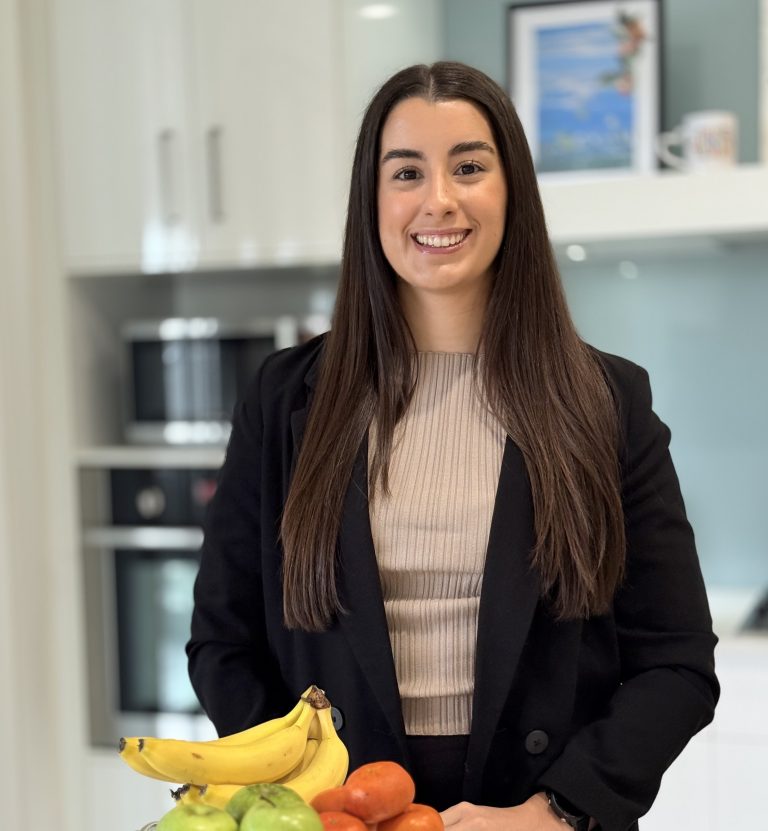
Tess Prendergast
Tess is a compassionate dietitian who provides support to a wide range of conditions for My Nutrition Clinic, including those wanting to lose weight or who have weight concerns. Tess has a special interest in endometriosis, gut health, mental health and chronic diseases.
Book an appointment
Anna D’Arcy
Anna has over 20 years experience as a dietitian and has worked in a wide range of settings, from hospitals to public health and private practice. Anna’s areas of practice include eating disorders, weight concerns, and gastrointestinal disorders.

Trusted resources for further information
Deakin University Food and Mood Centre
- Research backed evidence for the management of depression
- Up to date research projects
GESA (Gastrointestinal Society of Australia)
- Information leaflets on a wide range of gastrointestinal issues
FAQ
No. Diet is an adjunct — it works alongside whatever else you’re doing for your mental health. Please don’t stop or change any medication without talking to your GP or psychiatrist first.
No. This is not a weight-loss program. The original SMILES trial showed mood improvements without any weight change at all. We track how you feel, not what you weigh.
Yes. We start exactly where you are. You don’t need to be a confident cook — many people start with toast and microwave rice. We’ve designed the program around five-minute meals, tinned and frozen options, and pantry-skeleton cooking.
Most people notice changes in energy, digestion or sleep before they notice changes in mood. The mood evidence comes in over 8 to 12 weeks. Weeks 4–6 are often when people start to drift — that’s the part we’ll help you push through.
Yes. We have a one-page summary of the program with the evidence base and referral details that we can send directly to your GP. Just ask.
It can be, with the right framing. Our team is trained in eating-disorder care and the program is designed around adding helpful foods rather than restricting. We coordinate closely with your existing eating-disorder treatment team.
Yes — most sessions can be done by video if that’s easier for you. DVA telehealth is supported under the relevant items.